46 posts tagged with "Firebase"

The Firebase tag archive on our blog features a variety of tutorials and articles, providing insights into using Firebase for web and app development.

View All Tags

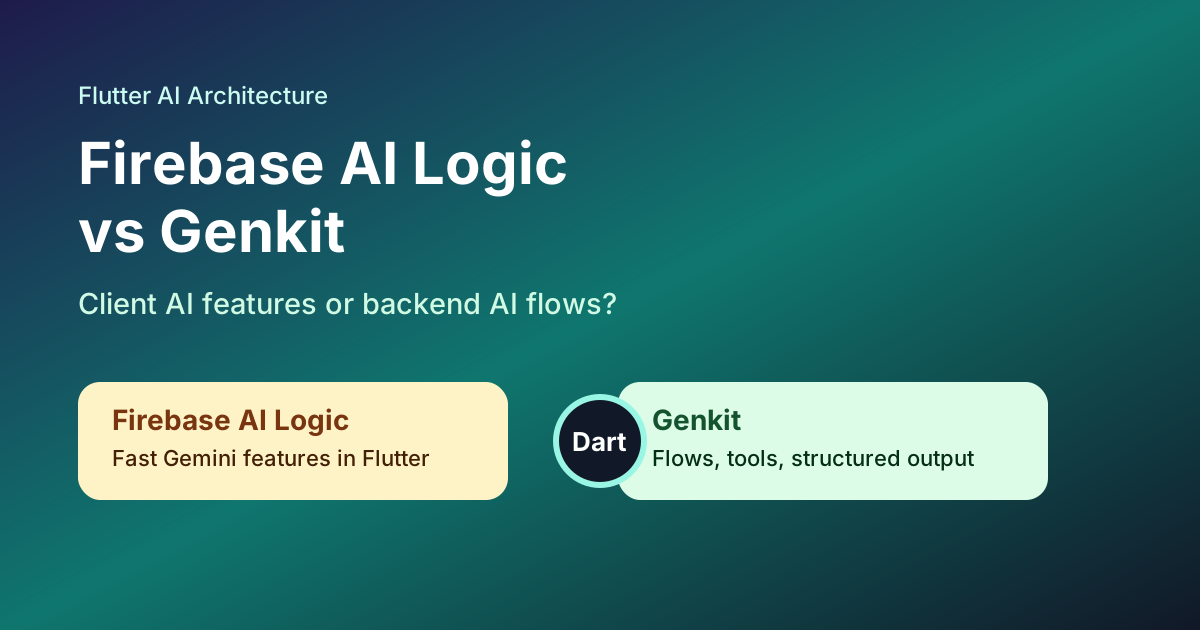
Firebase AI Logic vs Genkit for Flutter: Which Architecture Should You Use?

· 6 min read
Full Stack Developer

Flutter teams now have two strong Google-backed paths for AI features:

  • Firebase AI Logic for direct AI calls from mobile and web apps;
  • Genkit for full-stack AI flows, tools, structured output, and agentic workflows.

The right choice is less about which one is "better" and more about where the AI decision should live: in the Flutter client, in a backend flow, or across both.

Decision map comparing Firebase AI Logic and Genkit for Flutter apps

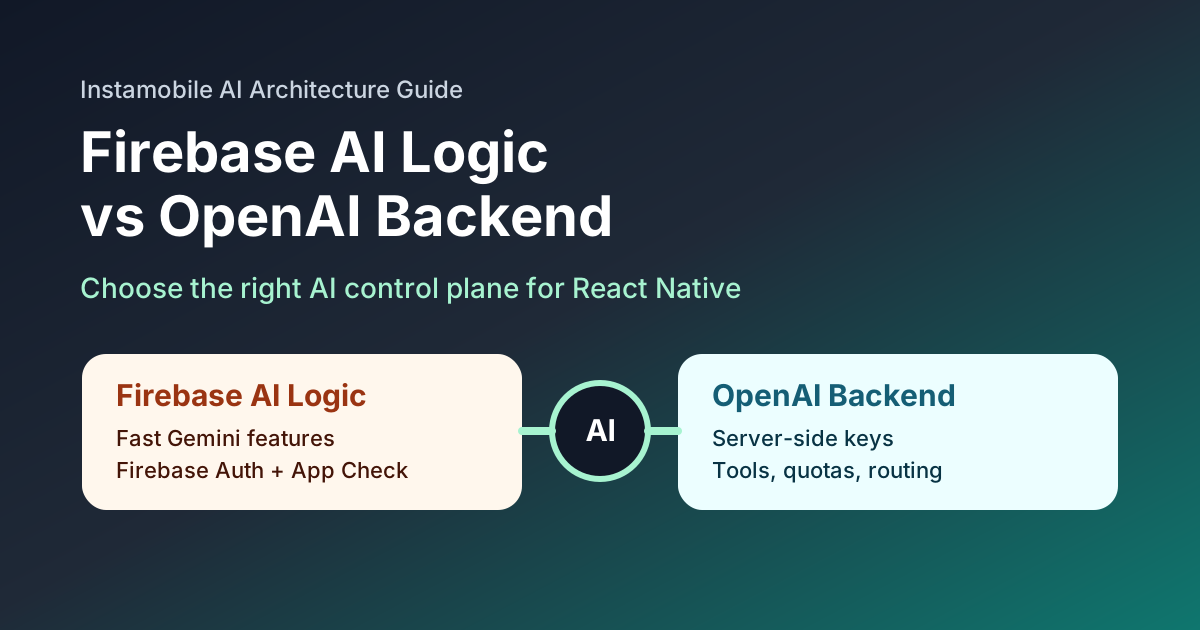
Firebase AI Logic vs OpenAI Backend for React Native AI Apps

· 6 min read
Full Stack Developer

React Native teams now have two practical ways to add serious AI features to a mobile app:

  • call Gemini models through Firebase AI Logic from a Firebase-aware app;
  • keep AI orchestration on your own backend and call OpenAI from the server.

Both approaches can be correct. The wrong choice is usually the one that ignores secrets, user identity, App Store release cycles, cost controls, and how quickly your AI product will evolve.

Comparison of Firebase AI Logic and OpenAI backend architecture for React Native

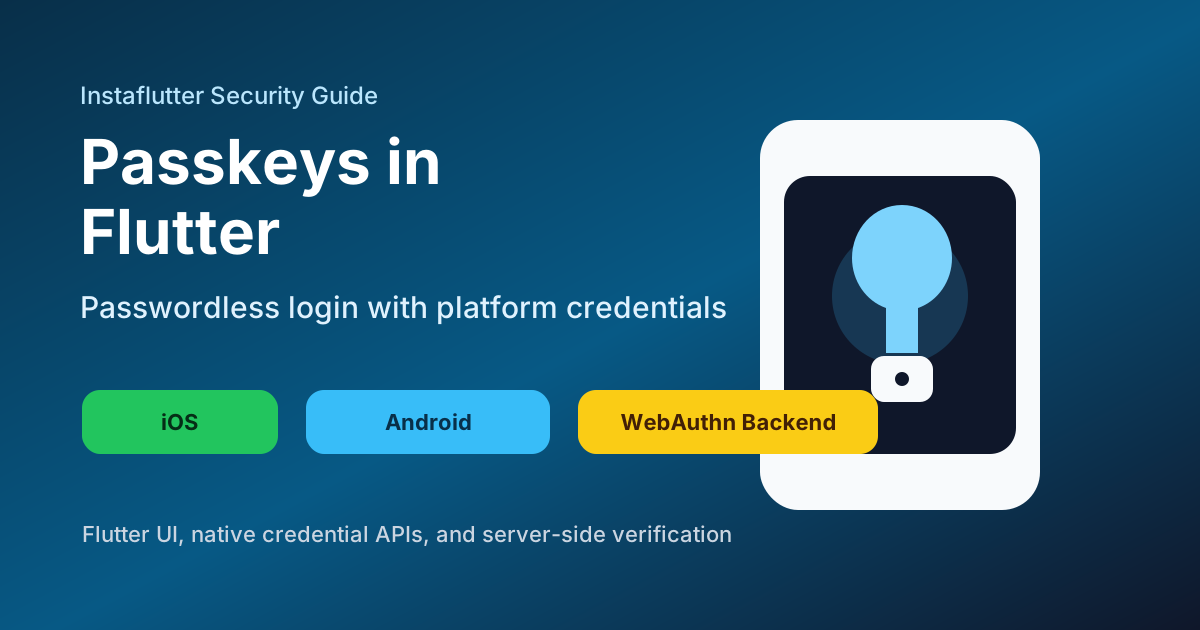
Passkeys in Flutter: Passwordless Login for iOS and Android

· 6 min read
Full Stack Developer

Passkeys are one of the most important authentication upgrades Flutter teams can make. They reduce password reset friction, remove reusable password risk, and use the platform sign-in experience users already trust.

In Flutter, the hard part is not drawing the button. The hard part is choosing a safe architecture across Dart code, iOS AuthenticationServices, Android Credential Manager, domain association files, and backend WebAuthn verification.

Flutter passkey login flow across iOS Android and backend verification

Flutter AI Apps Need Remote Config, App Check, and a Fallback Plan

· 8 min read
Full Stack Developer

Adding AI to a Flutter app is easier than it was a year ago. Firebase AI Logic now gives Flutter teams a Dart SDK for mobile AI features, direct access to Gemini and Imagen models, and built-in integrations with other Firebase services.

That makes demos faster. It does not make production risk disappear.

Production-ready Flutter AI app architecture with App Check, Remote Config, and backend fallback

The Complete Guide to Building Production-Ready Flutter Apps

· 13 min read
Full Stack Developer

Flutter makes cross-platform shipping faster, but speed alone does not make an app production-ready. Many apps launch quickly and still fail under real usage because the architecture is brittle, the backend strategy is vague, and release quality is inconsistent.

This guide is for developers and technical founders who want a practical, scalable path from prototype to maintainable production app.

You will learn:

  • How to evaluate flutter app templates strategically
  • How to pick between starter kits, full templates, and UI kits
  • How to build scalable Flutter architecture
  • How to connect Firebase without creating operational debt
  • How to release and debug with production discipline

If you are mapping options first, start with the main template catalog at /templates and then use this guide to choose the right baseline.

The Complete Guide to Building Production-Ready Android Apps with Kotlin

· 8 min read
Full Stack Developer

Architecture, Firebase, and templates for shipping faster without fragile code.

Kotlin Android production workflow from idea to release

Building Android apps in Kotlin is straightforward. Building production-ready apps that stay maintainable after six months of feature requests is harder.

This guide is for Kotlin developers, founders, and teams who want to:

  • avoid rebuilding the same foundation for every app
  • use templates as accelerators, not crutches
  • ship quickly while keeping architecture clean

If you want to browse all available products first, start at templates.

How to Launch a Mobile App MVP in Under 48 Hours Using AI-Native Templates

· 6 min read
Full Stack Developer

How to launch a mobile app MVP in under 48 hours

The old three-month development cycle is dead. If you are not launching in days, you are losing to teams that are.

The reason is simple: infrastructure is usually most of the work and none of the differentiation. Authentication, database wiring, server endpoints, push setup, subscription logic, and release plumbing can consume most of your schedule before users even touch your core feature.

This guide shows a better path: use Instamobile full-stack templates with Firebase Functions, launch your first version in one weekend, and reserve your engineering time for what users actually pay for.

By the end of this post, you will know exactly how to skip boilerplate hell and go straight to store-ready MVP execution.

Zero-Trust Security in Mobile Apps: A 2026 Implementation Guide for Fintech and E-commerce

· 5 min read
Full Stack Developer

Zero-Trust Security in Mobile Apps cover

In an era of AI-assisted fraud and automated attack tooling, the old "password + perimeter" model is no longer enough.

The zero-trust principle is simple and brutal: never trust, always verify. NIST defines zero trust as an architecture where no implicit trust is granted based on network location or asset ownership, and where authentication and authorization are continuously enforced for users and devices.

For fintech and e-commerce, this is not a nice-to-have feature. Security decisions directly affect conversion, retention, and brand trust.

The good news: you do not need to build it all from scratch. Instamobile full-stack templates already embed practical zero-trust building blocks, especially through Firebase Auth, Firestore rules, and Cloud Functions.