11 posts tagged with "deployment"

The 'deployment' tag archive on our blog features a range of articles and tutorials focusing on various deployment strategies and techniques.

View All Tags

Expo Router API Routes and EAS Hosting: A Backend for React Native Apps

· 5 min read
Full Stack Developer

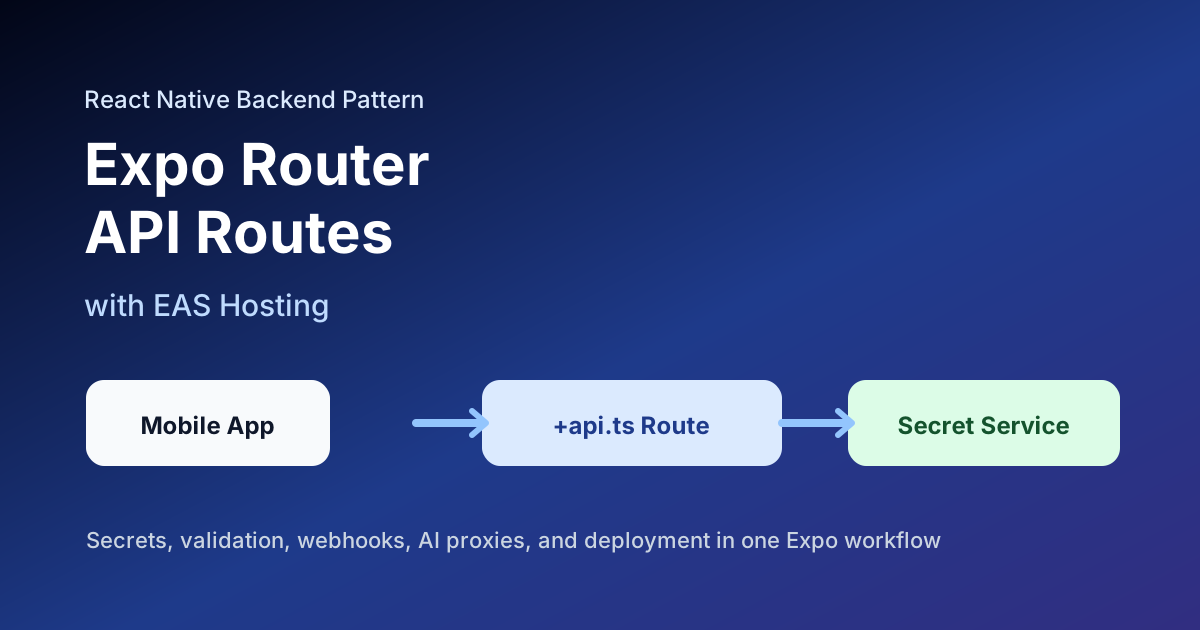
Expo Router API routes give React Native teams a practical middle ground between "everything is client-side" and "we need a separate backend project before we can ship." With EAS Hosting, those routes can be deployed alongside an Expo Router web app and used for server-side work such as secrets, validation, webhooks, AI calls, and small backend endpoints.

Expo Router API routes and EAS Hosting backend architecture

Angular and Kubernetes: Deploying to a Cluster

· 11 min read
Engineering Team

In this tutorial, we will explore how to deploy an Angular application to a Kubernetes cluster. We will start by setting up the Kubernetes cluster, installing and configuring it. Then, we will build the Angular application and containerize it using Docker. Finally, we will deploy the Angular application to the Kubernetes cluster, update and roll back the application, and monitor and troubleshoot any issues that may arise.

Angular and Netlify: Hosting Your App with Ease

· 6 min read
Engineering Team

This tutorial will guide you through the process of hosting your Angular app on Netlify with ease. We will start by setting up an Angular project, configuring it for deployment, and then deploy it to Netlify. We will also cover setting up a custom domain, enabling SSL for your app, automating deployments with Netlify, and optimizing performance using caching and CDN, lazy loading, and code splitting.

Angular and Firebase Hosting: Fast and Secure Deployment

· 7 min read
Engineering Team

In this tutorial, we will explore how to deploy an Angular application using Firebase Hosting. Angular is a popular JavaScript framework for building web applications, while Firebase Hosting is a powerful hosting platform that provides fast and secure deployment. By combining the two, developers can benefit from fast and efficient development, real-time updates, scalability, reliability, and secure deployment.

Angular and DevOps: Bridging the Gap

· 10 min read
Engineering Team

In this tutorial, we will explore the integration of Angular and DevOps practices to bridge the gap between development and operations. We will discuss the benefits of this integration, set up the Angular development environment, implement DevOps practices in Angular development, and cover monitoring and logging in Angular applications. Additionally, we will provide best practices for Angular and DevOps integration.

Angular and Docker: Containerizing Your App

· 11 min read
Engineering Team

In this tutorial, we will explore the process of containerizing an Angular application using Docker. We will start by understanding what Docker and Angular are, and then delve into the benefits of containerization. We will then guide you through the steps of getting started with Docker, including installing Docker, creating a Dockerfile, building Docker images, and running Docker containers. Finally, we will discuss best practices for optimizing Docker images, managing dependencies, and deploying a Dockerized Angular app.

Angular and Heroku: Deploying to the Cloud

· 9 min read
Engineering Team

This tutorial will guide you through the process of deploying an Angular app to the cloud using Heroku. We will start by setting up a Heroku account and installing the Heroku CLI. Then, we will prepare our Angular app for deployment by building it and configuring the package.json file. Next, we will deploy the app to Heroku by initializing a Git repository and pushing the app to Heroku. We will also cover how to set up environment variables, test the deployment, troubleshoot common issues, and scale the app. By the end of this tutorial, you will have a fully deployed Angular app running on Heroku.

Angular and Vercel: Deploying Angular Apps

· 6 min read
Engineering Team

In this tutorial, we will learn how to deploy Angular apps using Vercel. Angular is a popular JavaScript framework for building web applications, while Vercel is a cloud platform that provides serverless deployment for static websites and frontend applications. By the end of this tutorial, you will be able to deploy your Angular app to Vercel, set up a custom domain, enable SSL, and automate deployments using GitHub integration.