13 posts tagged with "Software Development"

Our Software Development archive features a wealth of resources for developers at all levels. From tutorials to in-depth articles, discover a range of topics to boost your knowledge and skills.

View All Tags

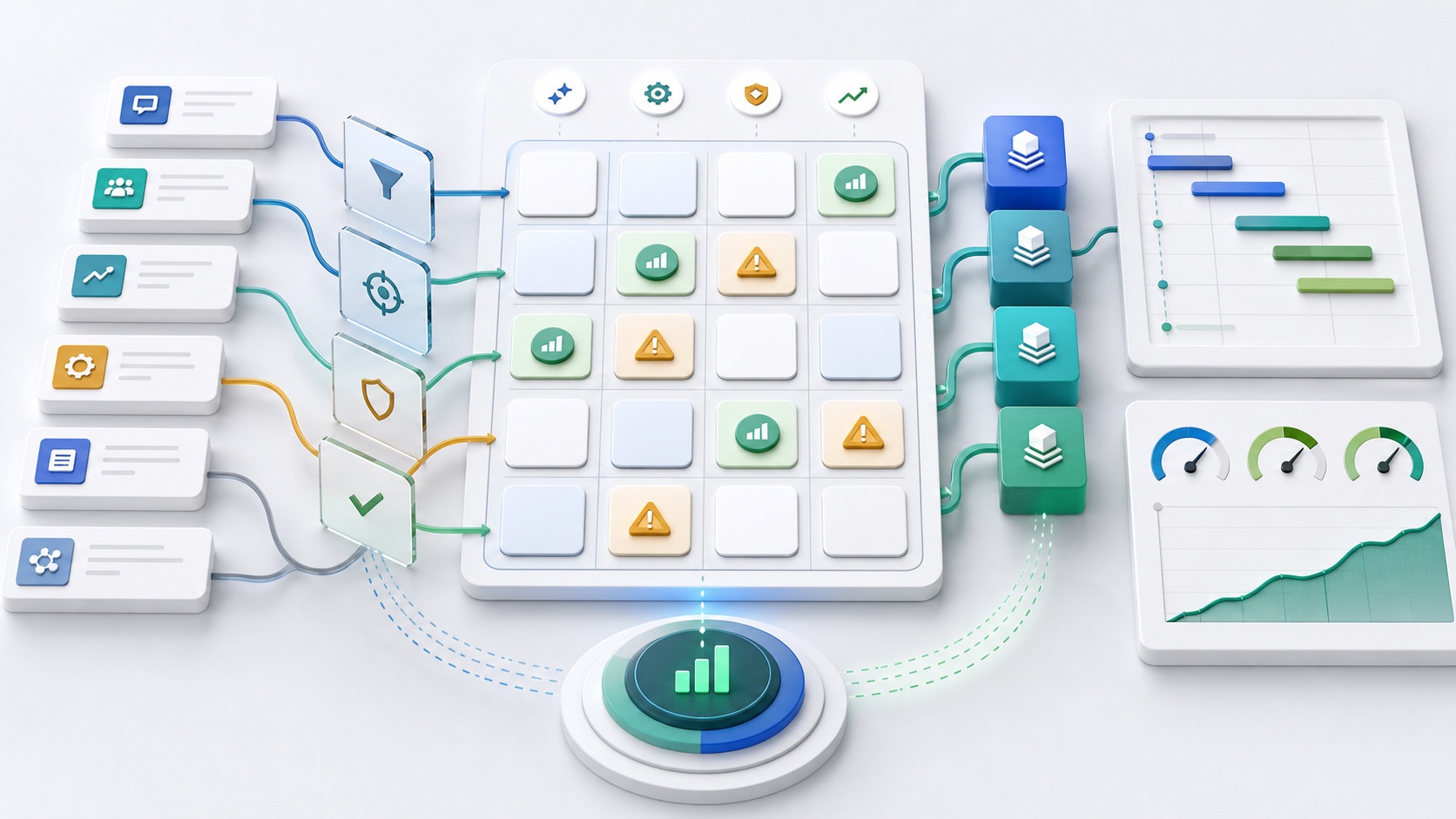
How to Choose AI Use Cases and Measure Real ROI

· 6 min read
Engineering Team

The fastest way to waste money on AI is to start with the question, "Where can we add AI?" That question produces chat widgets, vague pilots, and dashboards full of activity metrics that do not change the business.

Start with a better question: "Which workflow would create measurable value if it became faster, cheaper, safer, or more consistent?" This guide gives founders, product teams, and engineering leads a practical framework for choosing AI use cases and measuring ROI without falling into AI theater.

AI use case selection and ROI framework

How to Build an AI-Ready Team Without Hiring Unicorns

· 5 min read
Engineering Team

Many businesses think they need rare AI specialists before they can ship useful AI. In reality, most teams need something more practical: product people who can identify valuable workflows, developers who can integrate AI safely, operators who can evaluate outputs, and managers who can redesign processes.

You do not need a team of unicorns to become AI-ready. You need a focused upskilling system that turns existing domain knowledge into better software workflows.

AI-ready team upskilling plan

Shadow AI vs Controlled AI: How to Reduce Risk and Increase Productivity

· 5 min read
Engineering Team

Shadow AI is not a sign that employees are reckless. It is a sign that they have work to do and the official tools are not helping enough. When the approved path is slower than copy-pasting into a public chatbot, people choose speed.

The answer is not to ban AI and hope behavior changes. The answer is controlled AI: approved workflows that are safer, faster, logged, permission-aware, and designed around the jobs employees already perform.

Shadow AI compared with controlled AI workflows

AI Change Management: How to Get Teams to Actually Use AI Tools

· 5 min read
Engineering Team

AI adoption fails when leaders treat it like a software installation. A new tool appears, a few early adopters experiment, everyone else keeps working the old way, and the company concludes that AI did not create value.

Real adoption requires change management. People need to understand which workflows should change, what good usage looks like, which risks matter, who owns the new process, and how success will be measured. The goal is not to force everyone to use AI. The goal is to make the right workflows easier, safer, and more valuable with AI in the loop.

AI change management playbook for teams

AI Integration With Legacy Systems and Undocumented APIs

· 5 min read
Engineering Team

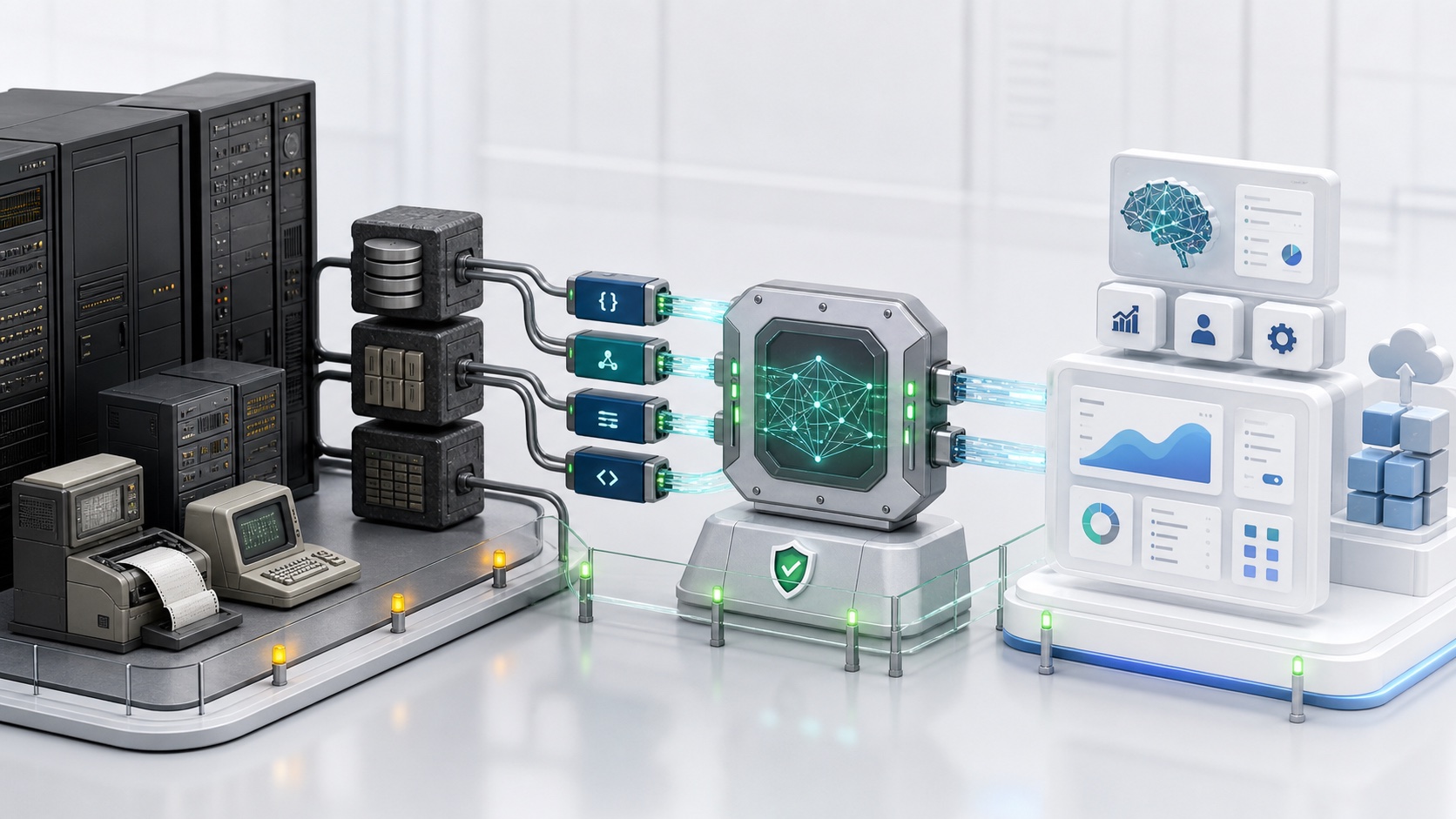
Most businesses do not run on clean, modern, AI-friendly systems. They run on old CRMs, spreadsheets, custom databases, half-documented APIs, shared inboxes, manual approvals, and internal tools that still work well enough to be dangerous.

That does not mean AI integration is impossible. It means the integration layer matters more than the prompt. If the AI feature cannot safely read, transform, and act on legacy data, the model will create more operational mess instead of reducing it.

AI integration with legacy systems and APIs

How to Build the Right Context for AI Agents Without Hallucinations

· 5 min read
Engineering Team

AI agents fail when they act on the wrong context. The model may be capable, but it cannot safely reason over customer data, product rules, billing state, internal documents, or support history unless the application gives it the right information in the right shape.

Better context is not the same as more context. Production agents need constrained, permission-aware, current, and task-specific context. This guide shows how to design that context for mobile apps, admin panels, internal tools, and AI-powered customer workflows.

AI agent context architecture

The AI Last-Mile Problem: Why Production AI Still Fails to Create Value

· 5 min read
Engineering Team

Getting an AI demo to work is easy compared with getting AI to change a real business outcome. The last-mile problem is the gap between a model that can generate useful output and a product workflow that reliably saves time, increases revenue, improves support, or reduces operational risk.

Many AI pilots reach production and still disappoint. They are technically deployed, but employees ignore them. Customers do not trust them. Edge cases require manual cleanup. Legal, support, sales, product, and engineering all discover hidden requirements after launch.

AI last-mile production workflow

AI Governance and Security: How to Prevent Data Leaks and Shadow AI

· 6 min read
Engineering Team

Shadow AI happens when employees use unmanaged AI tools to get work done because the approved workflow is slower, weaker, or missing entirely. The risk is not that people are curious. The risk is that private customer records, product plans, credentials, legal documents, and internal source code can move into tools the company does not control.

AI governance should not be a heavy policy document that blocks adoption. It should be a product and engineering system: approved tools, scoped permissions, logging, retention rules, safe defaults, and clear escalation paths.

AI governance and security controls for business software

From Data Silos to a Single Source of Truth: The Architecture That Makes AI Work

· 6 min read
Engineering Team

AI becomes useful when it can see the same business reality your team sees. That is hard when customer records live in a CRM, invoices live in billing, support history lives in a help desk, product events live in analytics, and internal policies live in scattered documents.

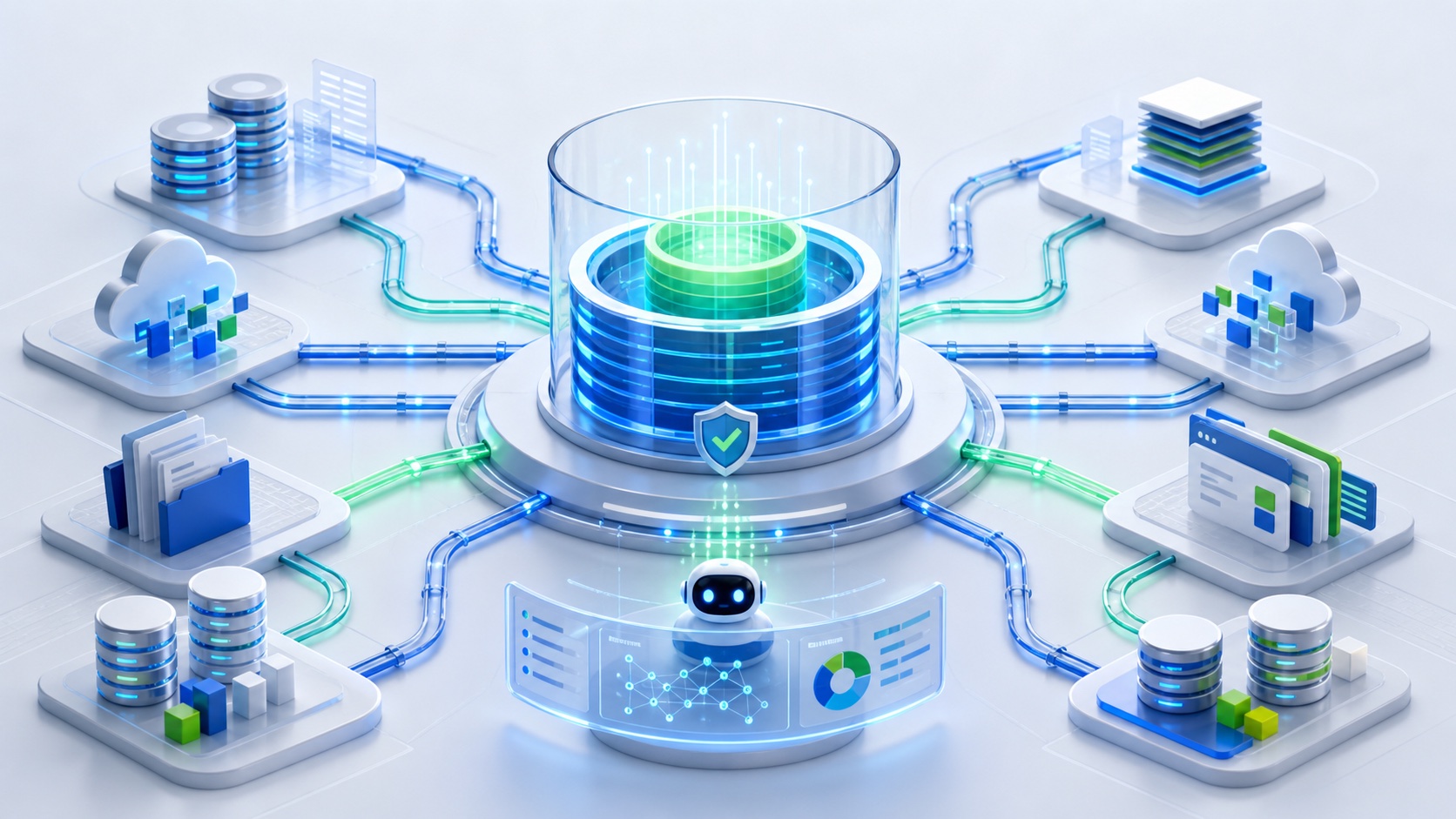
The result is familiar: the AI gives partial answers, misses context, violates permissions, or forces employees to paste private data into a chat window. A single source of truth does not mean putting every byte in one database. It means designing a trusted layer where business entities, permissions, events, and knowledge can be resolved consistently.

Single source of truth architecture for AI systems

AI Data Readiness Checklist: Prepare Your Business Data Before You Build

· 7 min read
Engineering Team

Most AI projects do not fail because the model is weak. They fail because the model receives messy, stale, incomplete, or unsafe data. A chatbot connected to outdated policies gives bad answers. A workflow agent without clear permissions exposes the wrong records. A recommendation engine trained on duplicate events optimizes for noise.

Before you add AI to a mobile app, admin panel, internal tool, or customer portal, make the data layer ready for AI. This checklist gives founders, CTOs, and product teams a practical way to audit data quality, structure, access, freshness, and feedback loops before the first production prompt.

AI data readiness checklist for business apps

Angular and Waterfall Model: Traditional Software Development

· 6 min read
Engineering Team

This tutorial aims to provide a comprehensive understanding of the combination of Angular, a popular JavaScript framework, and the Waterfall Model, a traditional software development methodology. We will explore the advantages and disadvantages of both Angular and the Waterfall Model, and compare their development approaches. By the end of this tutorial, you will have a clear understanding of how Angular and the Waterfall Model can be used together in software development projects.

Angular and Spiral Model: Iterative Development Approach

· 11 min read
Engineering Team

This tutorial will provide a detailed explanation of how to integrate Angular, a popular JavaScript framework, with the Spiral Model, an iterative development approach. We will explore the benefits of using iterative development, the key principles behind it, and the advantages of combining Angular with the Spiral Model. Additionally, we will walk through the iterative development process with Angular and the Spiral Model, covering requirements gathering, design and planning, implementation and testing, evaluation and feedback, and iterative enhancements. Finally, we will present a case study of building an Angular application using the Spiral Model, discussing the project overview, Spiral Model phases, Angular development best practices, and challenges encountered. By the end of this tutorial, you will have a comprehensive understanding of how to leverage the Angular framework and the Spiral Model for iterative development.