In this article, we are describing in details how to integrate Apple Pay into an iOS app. We'll code in the latest version of Swift and the code samples are extracted from our beautiful app templates, many of which have built-in support for Apple Pay. Feel free to download them directly, if you want to skip the hassle of learning how to integrate Apple Pay by yourself.
If you already know JavaScript or React, the fastest way to learn React Native is not to watch weeks of passive tutorials. The fastest path is to run a real app, inspect the code, make small changes, debug those changes, and then ship a small feature end to end.
This guide gives you a practical learning roadmap for React Native developers who want to move from "I understand the basics" to "I can customize and launch an app."
At iOS App Templates, we are building fully coded mobile app templates in Swift, to help startups create their mobile products faster. Part of our mission is to provide highly modularized source code so that developers can easily customize and adapt our code to fit their needs. We are starting a tutorial series on iOS Design Patterns in Swift. In this article, we are going to talk about the adapter pattern, which we widely use in our Xcode projects.
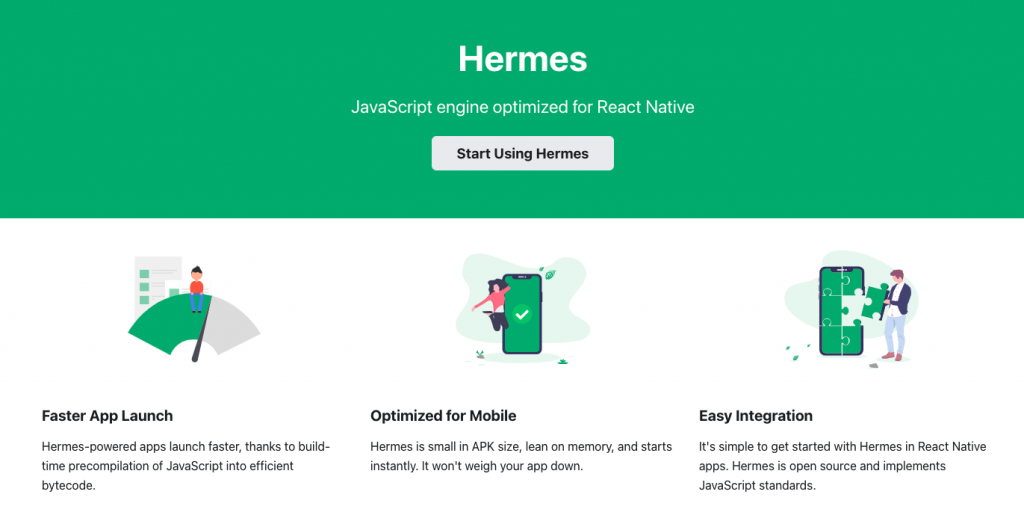
Hermes is the JavaScript engine optimized for React Native. In modern React
Native and Expo projects, Hermes is the default path for most apps, so the real
question is no longer "How do I turn Hermes on?" It is "How do I confirm Hermes
is working, benchmark the app properly, and avoid update/runtime mismatches?"
The best React Native app ideas for beginners are small enough to finish, but complete enough to teach real mobile development. A good beginner project should include screens, navigation, lists, forms, data, error states, and a build you can install on a device.
This guide gives you practical project ideas and explains what each one teaches.
For front-end web and mobile developers, AWS Amplify is a suite of tools and services that can be used together or separately to enable them to create scalable full-stack apps on AWS. App backends and connections can be configured in minutes with Amplify, static web applications can be deployed quickly and simply managed outside of the AWS interface with a few clicks.
Flutter’s new Navigator and Router API is described in detail in this post. These new functionalities may have been referred to as the Router widget in Flutter’s open design documents. Using these APIs, you’ll be able to fine-tune control over your app’s displays, and you’ll learn how to parse routes. These new APIs don’t break anything; they merely add a new declarative API to the list of available options. If you wanted to relocate or delete a page from the bottom of a stack, Navigator 2.0 made it much easier. It’s OK if you’re content with how the Navigator works right now, so long as you don’t mind the changes. Using the Router, the underlying platform’s routes may be handled and the relevant pages are shown. The Router is set up to show the relevant page based on the browser URL in this article.
Charts can make a mobile app easier to understand when the data is trustworthy and the interaction is fast. Business dashboards, finance apps, analytics products, ecommerce admin screens, health apps, and fitness apps all benefit from charts when the visualization answers a clear question. The examples below are a starting point; production apps should choose chart libraries based on data volume, gestures, accessibility, and device performance.
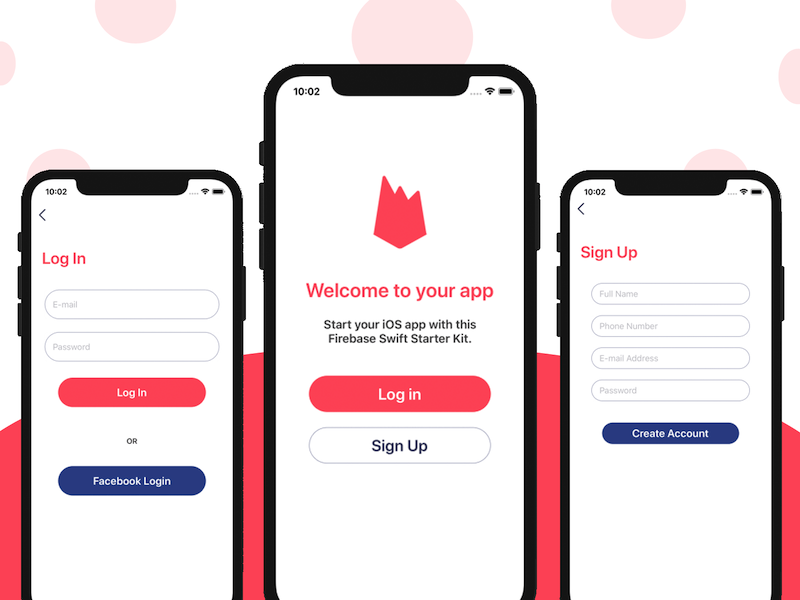
With the release of Swift 5 approaching and Firebase Firestore finally getting out of beta, let's take a look at how the Firebase Facebook Login is implemented in Swift. All of our Swift app templates have Facebook support since it's a widely demanded feature, so let's see how we implemented it.
Phone authentication lets users sign in with a phone number and a one-time SMS
code. It is useful for marketplaces, dating apps, delivery apps, booking apps,
and social apps where users expect a fast mobile-first onboarding flow.
Building a mobile app used to be a difficult job and only well-versed mobile developers had the ability to do it. But as the mobile development industry evolved over the last few years, the bar for creating an iOS app lowered, and so did the price. Both entrepreneurs and beginners in programming can easily create their own iOS apps now, with minimum coding skills, thanks to a ton of app templates that have emerged as the mobile industry took off. In this article, we are listing the best free iOS app templates, which you can freely use to create your own app in just a few minutes and with no financial investment. These app templates are also a great way to learn Swift or Objective-C or to just get your hands dirty with the iOS development process.
Practical product notes
Get the next useful guide
Occasional tutorials, product resources, and lessons from building and launching software.